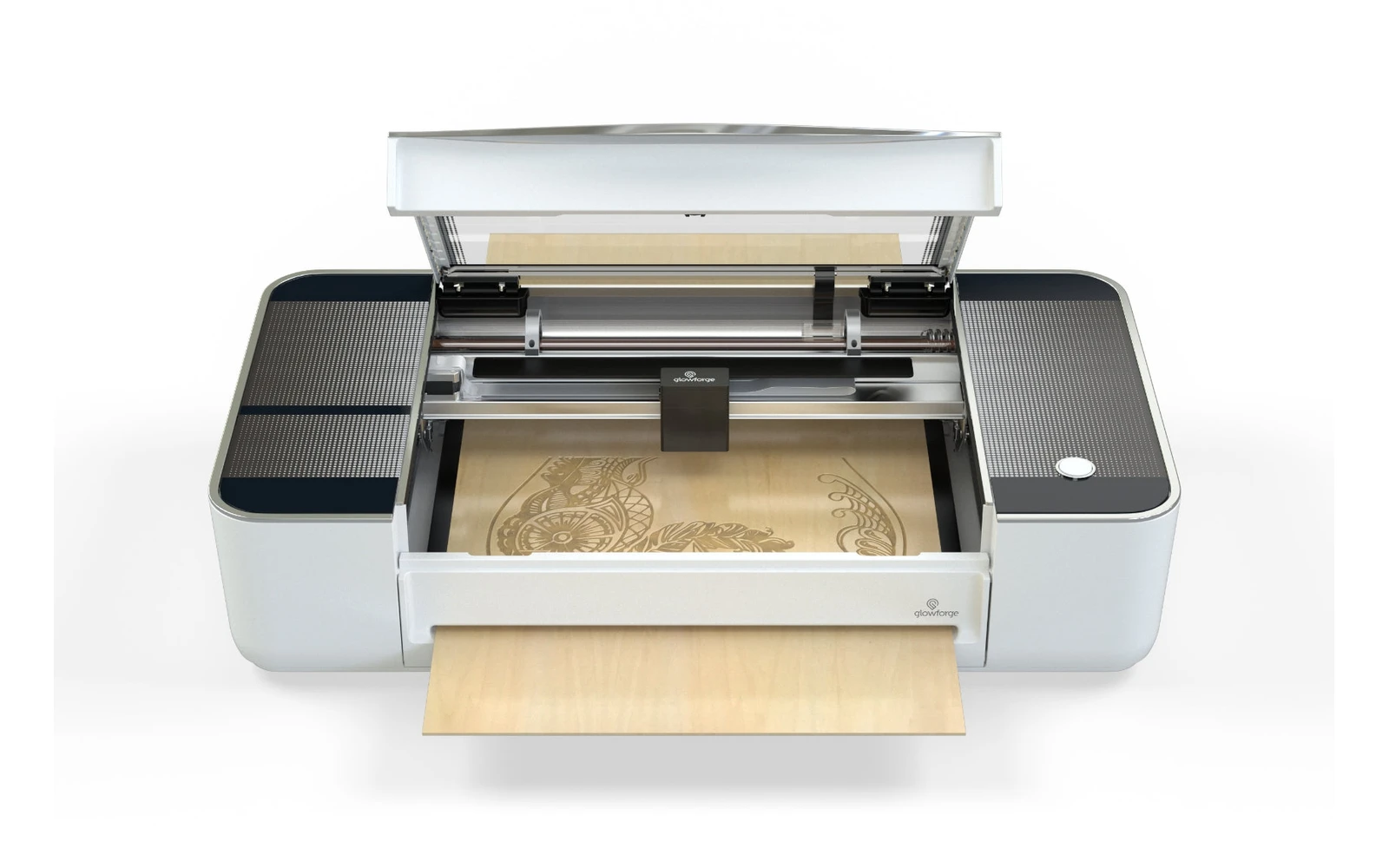
4 manufacturer photos · 1 / 4
Glowforge · CO₂
Glowforge Pro
Pass-through CO₂ for crafters: premium simplicity with subscription cost
All Glowforge models →Add to compare →
Last updated How we evaluate
Released April 2018
Discontinued
Glowforge no longer sells this machine new. We keep the profile online because it still turns up used and as a reference point.
TL;DR
The Glowforge Pro adds passthrough slot for long materials and stronger CO₂ performance vs Aura. Still cloud-dependent with subscription pressure. Best for design-focused crafters who refuse to touch LightBurn: not for cost-sensitive makers.
Compare the Glowforge Pro to…
Popular side-by-side matchups with full specs, scores, and an honest verdict.
Best for
What makes this machine stand out
Hardware and workflow features worth understanding before you buy : not just wattage on a label.
Real CO₂ cutting
A glass-tube CO₂ laser cuts cast acrylic and thick soft woods in ways diodes cannot match at the same price tier. Budget for outdoor exhaust or serious filtration : the cutting advantage is real, the ventilation homework is too.
Our verdict
Ideal if you
Glowforge Pro is built for acrylic signage, thick wood, and shop production once exhaust is sorted. 45W adds headroom on panels and multi-pass jobs.
Skip if you
Avoid without ducting, for occasional gifts only, or if budget ignores tube replacement, power, and floor space. Bare metal without an IR accessory stays out of scope.
Pros
- Strong on acrylic and wood versus diodes on the same budget tier
- Integrated cabinet helps contain the beam and everyday smoke versus open-frame diodes
- Software listed on the profile: test your workflow (LightBurn or maker app) on scrap first
Cons
- Ventilation to the outside is mandatory for regular cutting, not an optional upgrade
- Tube life and replacement cost are part of the true ownership budget
What this machine is for
Pass-through CO₂ crafting for long materials with zero-config software
Premium enclosed CO₂ for crafters engraving and cutting long thin materials with minimal technical setup.
Laser spot size
~0.18 mm CO₂ spot
Motion precision: 0.025 mm
Sample engrave job
~5–8 min
10 × 10 cm (4 × 4 in)
Sample cut job
~2–4 min
10 × 10 cm (4 × 4 in)
Reference benchmark: same job size on every machine so you can compare times fairly. Times are estimates for the reference job above; your design complexity and settings will change them.
Materials
- · Wood
- · Leather
- · Acrylic
- · Paper
- · Fabric
- · Anodized aluminum
Accessories & add-ons
Typical inclusions and add-ons for this profile : confirm your SKU.
- Included
Enclosure / cabinet
- Optional
Laser safety glasses
CO₂ wavelength: match OD rating for 10.6 µm if required by manual
- Recommended
Fire extinguisher
Editorial guidance : not a live parts list. See also: Ventilation setup · Safety basics
Practical notes
Beginner notes
This profile covers Glowforge Pro. Read the TL;DR and benchmarks before buying, then compare nearby models on the Compare page.
Pro tips
Factor 3-year subscription into total cost. Passthrough shines for long thin signs: not for thick industrial cutting.
Pro / technical specsRaw numbers for experienced users comparing machines.
- Max speed (spec)
- 400 mm/s
- Avg engrave speed
- 120–250 mm/s fill
- Avg cut speed
- 12–35 mm/s on 3 mm acrylic
Alternatives to the Glowforge Pro
Machines in the same space, picked from our database by type, price, and score.
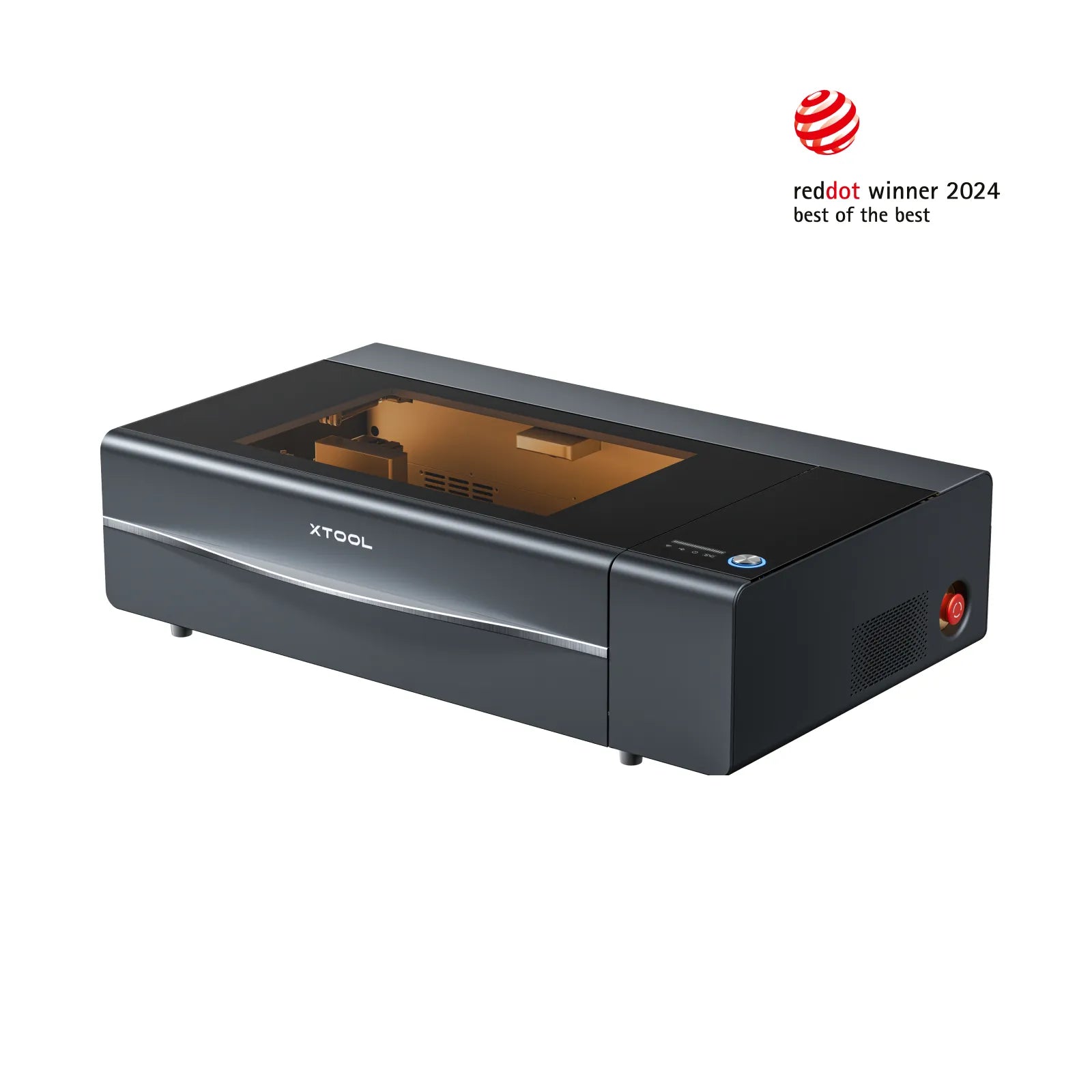
xTool · CO₂ · $3,399 – $6,609
The xTool P2 is a 55W enclosed CO₂ laser with a large work area and camera alignment. It cuts acrylic and wood far better than any diode laser. Expensive, but the closest thing to a 'set up and run a small shop' desktop machine.
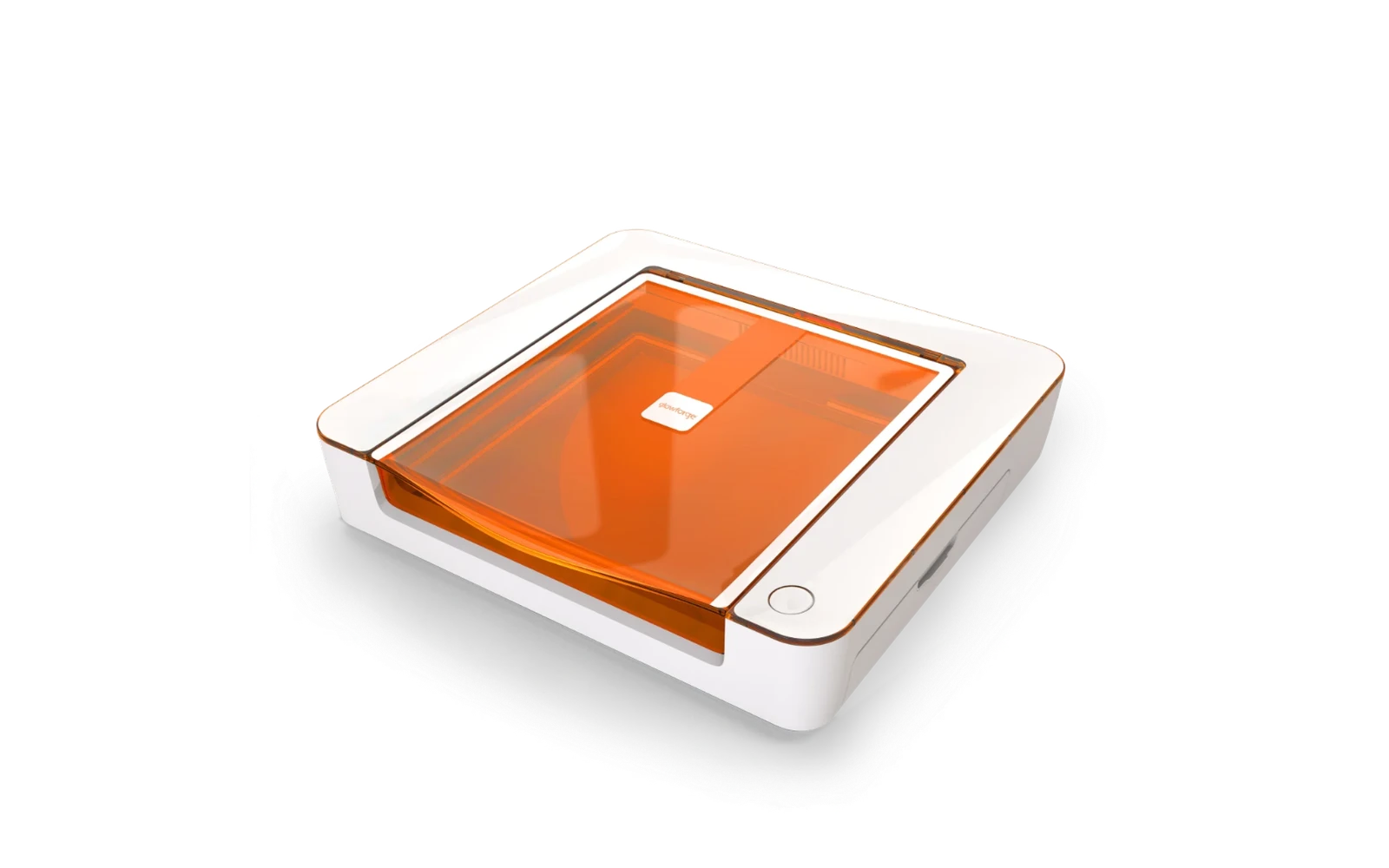
Glowforge · Diode · $999
Glowforge's compact 6W diode Craft Laser for crafters. Easy software, autofocus, quick setup and a Passthrough slot for long projects, but cutting is limited to thin materials. The catch: a cloud-based app (optional Premium subscription from $20/mo) and far less power than CO₂ machines like the xTool P2S.
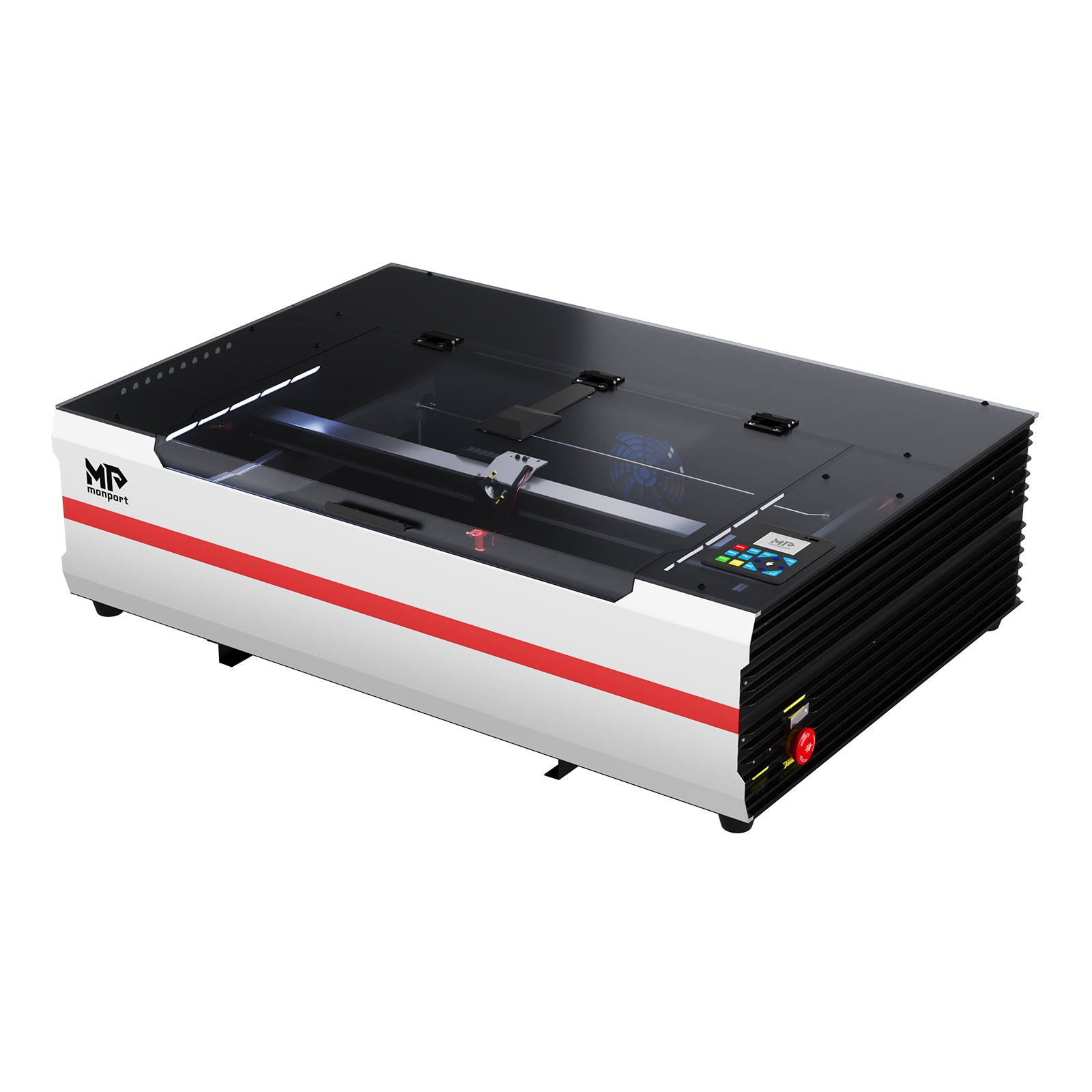
Monport · CO₂ · $1,800 – $2,800
Monport sits between budget K40 machines and premium enclosed CO₂ like xTool P2. The 55W desktop models offer real cutting power with improved build quality and optional autofocus. Still needs ventilation, but closer to 'business ready' than a stock K40.