Creality · Uv
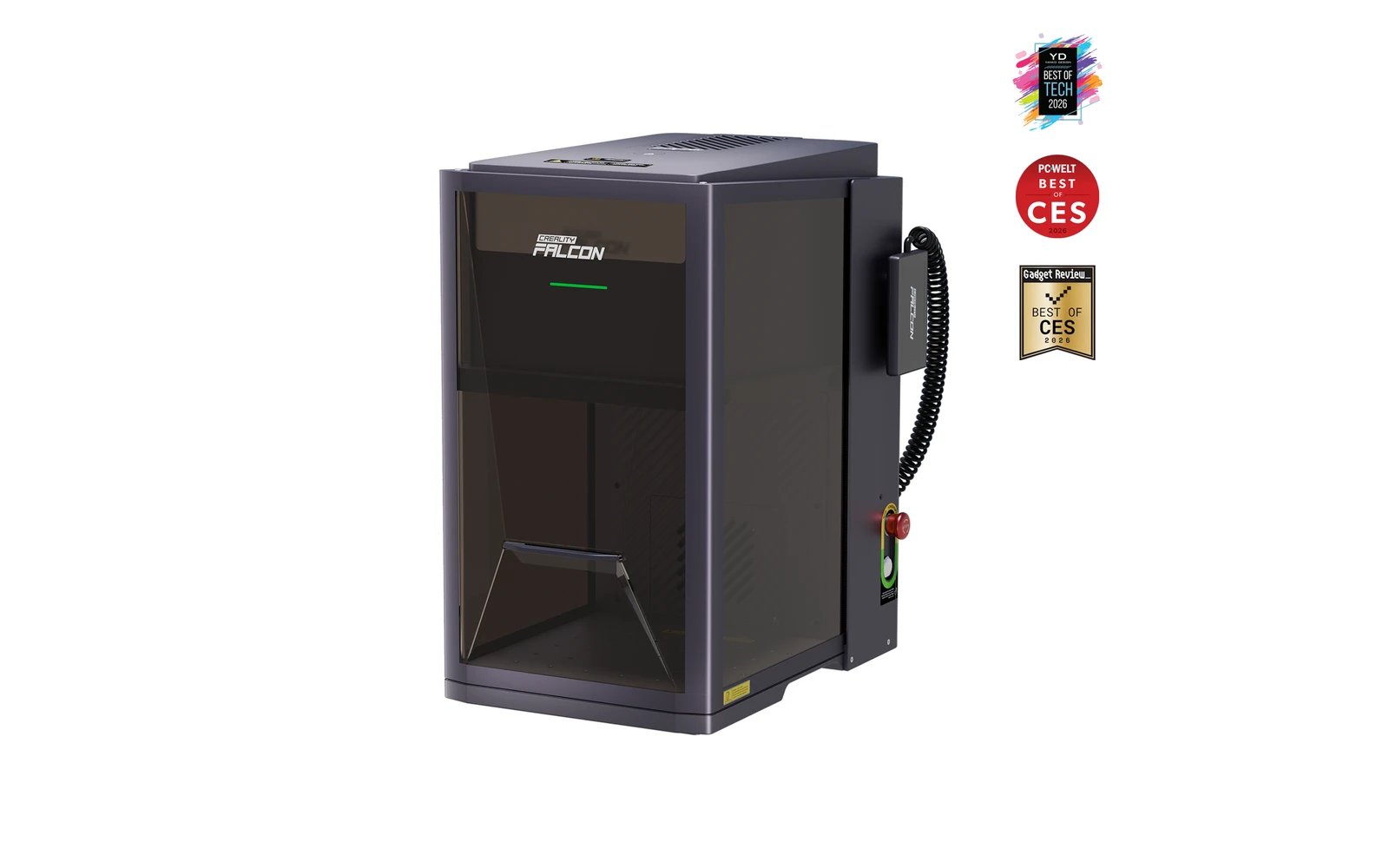
Creality Falcon T1 UV · 5W UV
5W UV galvo module: glass, film, and sensitive plastics on the T1 chassis
All Creality models →Add to compare →
Last updated How we evaluate
Released May 2026
Choose installed module
Details below match the selected module.
Showing module: 5W UV
TL;DR
The 5W UV WaveSync module targets materials diode and fiber struggle with: glass, some films, and heat-sensitive plastics. Install on the same Falcon T1 enclosure when your shop adds UV jobs after wood or metal modules.
Best for
What makes this machine stand out
Hardware and workflow features worth understanding before you buy : not just wattage on a label.
Cold marking
The UV wavelength marks with little heat, so glass, clear acrylic and heat-sensitive plastics are marked without melting or cracking.
Inside-crystal engraving kit
Creality includes an internal-engraving F-theta lens and bracket with the UV version, for subsurface marks in crystal blocks.
Our verdict
Ideal if you
The 5W UV module covers glass and heat-sensitive plastics on the T1 chassis: niche work that diode and fiber modules cannot do on the same platform.
Skip if you
Specialty module with narrow material list. Requires chassis and swap discipline. Not a first purchase for most shops: compare the base diode profile unless UV jobs are already sold.
Pros
- Marks glass, crystal and clear acrylic, which diode and fiber lasers handle poorly
- Smallest spot of the T1 modules (0.014 mm in CNX Software's spec table)
- Internal-engraving lens and bracket included, per Creality
Cons
- Expensive: $3,999 bundle or $2,599 alone (October 2026)
- Marking only: it does not cut
- Not Class 1 in open-cover modes (conveyor, rotary): eye protection is needed then
What this machine is for
UV galvo marking for glass and specialty plastics on the T1 platform
5W UV galvo module for glass and specialty marking on the Creality Falcon T1 chassis.
Laser spot size
~0.02 mm UV spot
Motion precision: 0.01 mm
Sample engrave job
~5–10 min
10 × 10 cm (4 × 4 in)
Sample cut job
Not a cutter
Reference benchmark: same job size on every machine so you can compare times fairly. Times are estimates for the reference job above; your design complexity and settings will change them.
Materials
- · Glass
- · Some plastics
- · Ceramic (light)
- · Film materials
Accessories & add-ons
Typical inclusions and add-ons for this profile : confirm your SKU.
- Included
Enclosure / cabinet
- Optional
Laser safety glasses
Still useful when servicing or with lid open
- Recommended
Fire extinguisher
Editorial guidance : not a live parts list. See also: Ventilation setup · Safety basics
Practical notes
Beginner notes
This profile is the 5W SKU on Creality Falcon T1 UV. Read the TL;DR and benchmarks above, then compare other modules via the chips before buying.
Pro tips
Run glass test tiles at low power: UV on glass is unforgiving. Keep dedicated ventilation practices for UV fumes per Creality guidance.
Pro / technical specsRaw numbers for experienced users comparing machines.
- Max speed (spec)
- 5,000 mm/s (marketing)
- Avg engrave speed
- UV marking speeds
- Avg cut speed
- N/A
Common questions
What is the T1 UV module for?
Cold marking on materials that burn, melt or reflect other lasers: glass, crystal, clear acrylic, many plastics and some films. CNX Software's spec table lists a 0.014 mm spot. A fine mark on a 10 × 10 cm glass panel took about 5–10 min in our benchmark.
Can the T1 UV engrave inside glass or crystal?
Creality ships the UV version with an internal-engraving F-theta lens and bracket, intended for subsurface marks in crystal. Expect to test settings carefully: results depend on the quality of the blank.
How much is the UV module compared with other T1 options?
$3,999 for the T1 UV bundle, or $2,599 for the module alone, on Creality's US store in October 2026. That is $1,500 more than the entry diode bundle, so it only pays if glass, crystal or plastic marking is a regular product.
Alternatives to the Creality Falcon T1 5W UV
Machines in the same space, picked from our database by type, price, and score.
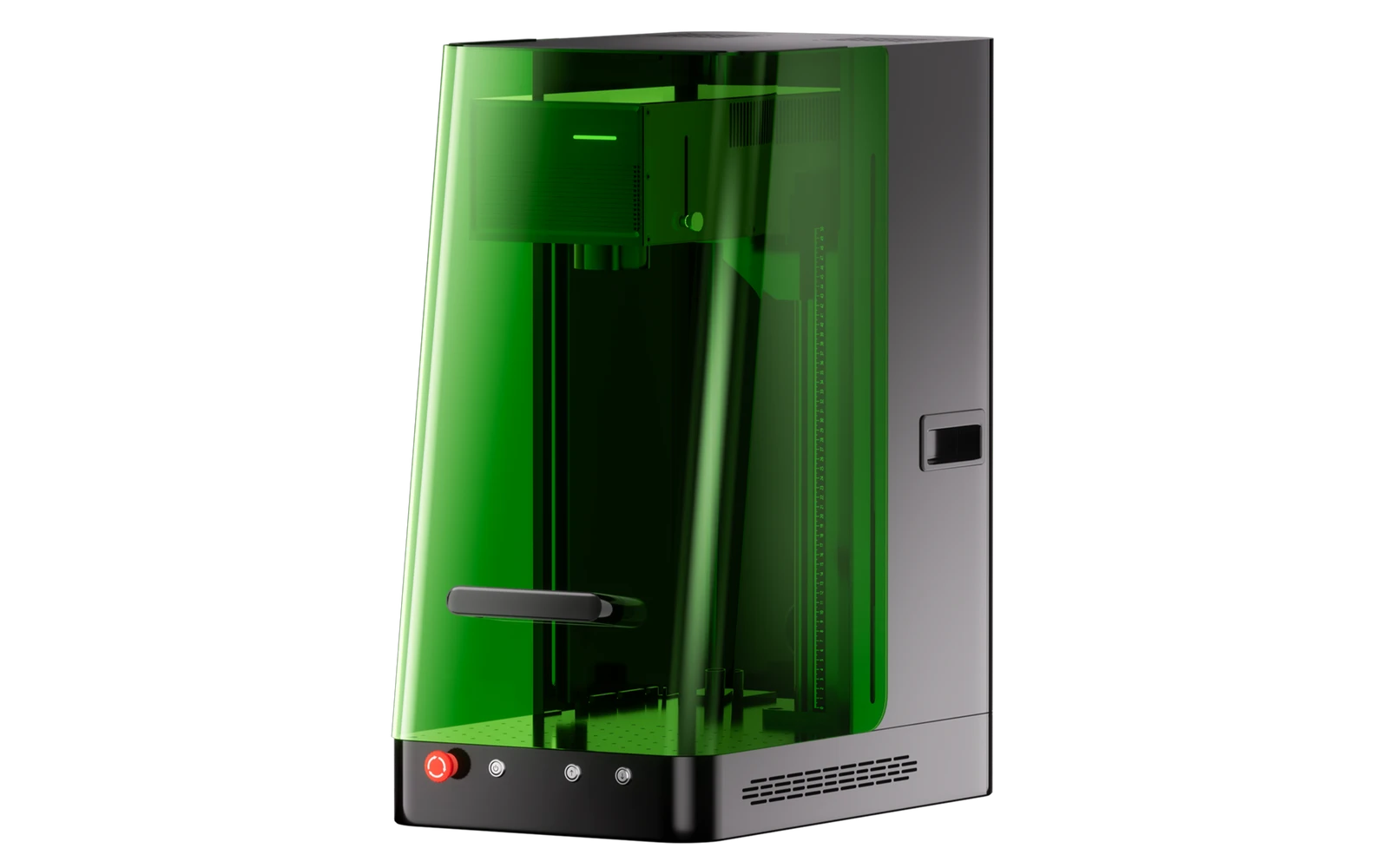
ComMarker · UV · $3,599 – $7,059
ComMarker Omni X uses UV wavelength for cold marking on glass, some plastics, and delicate materials without as much heat damage as fiber or CO₂. Slower than fiber on metal: different tool for different materials.
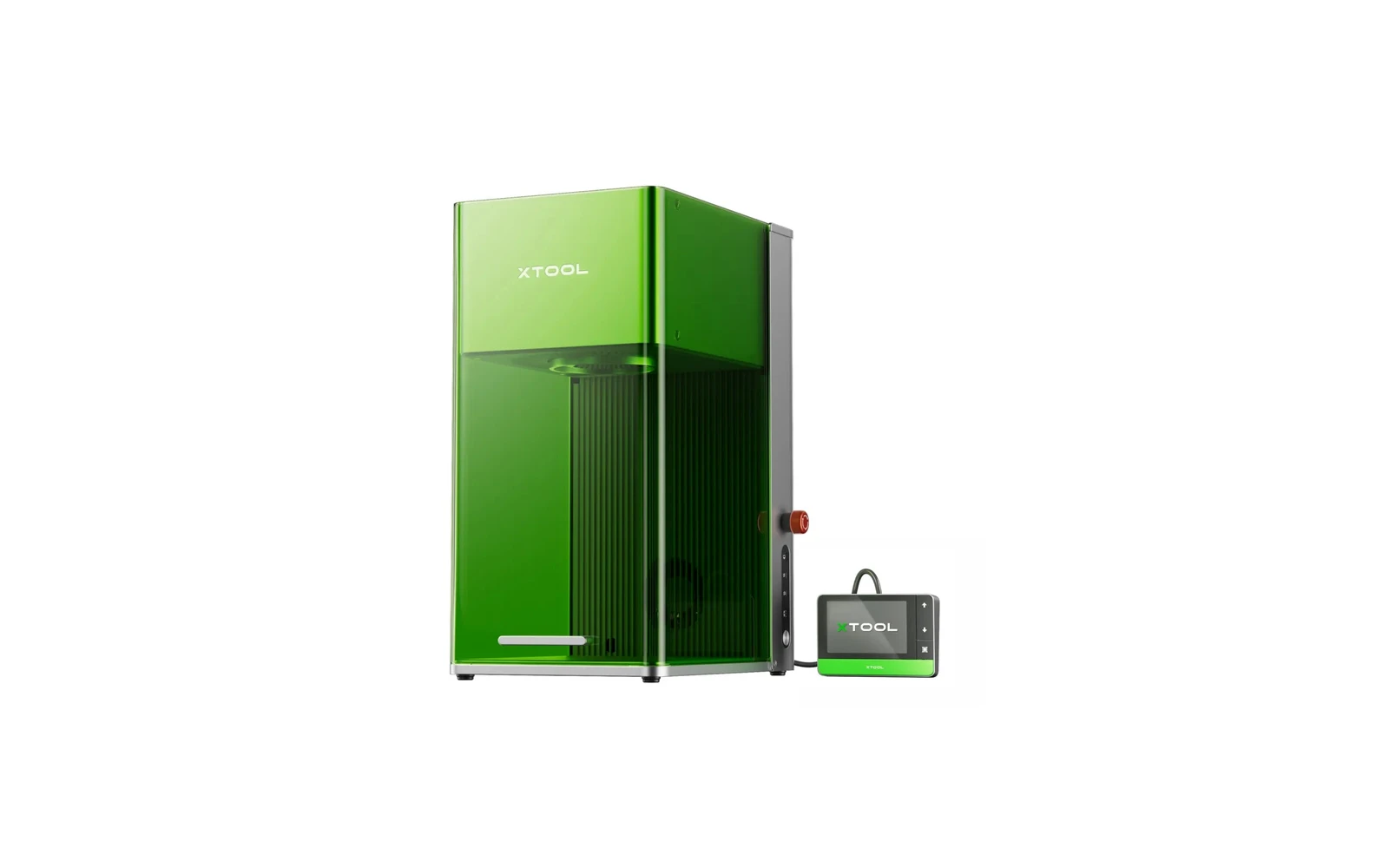
xTool · Hybrid · $2,999 – $4,659
A compact desktop machine combining a 20W fiber laser and 20W diode. The fiber module marks bare metal: stainless steel, aluminum, brass: without spray. Ideal for jewelry, knives, and metal gifts. Premium price for a small work area.
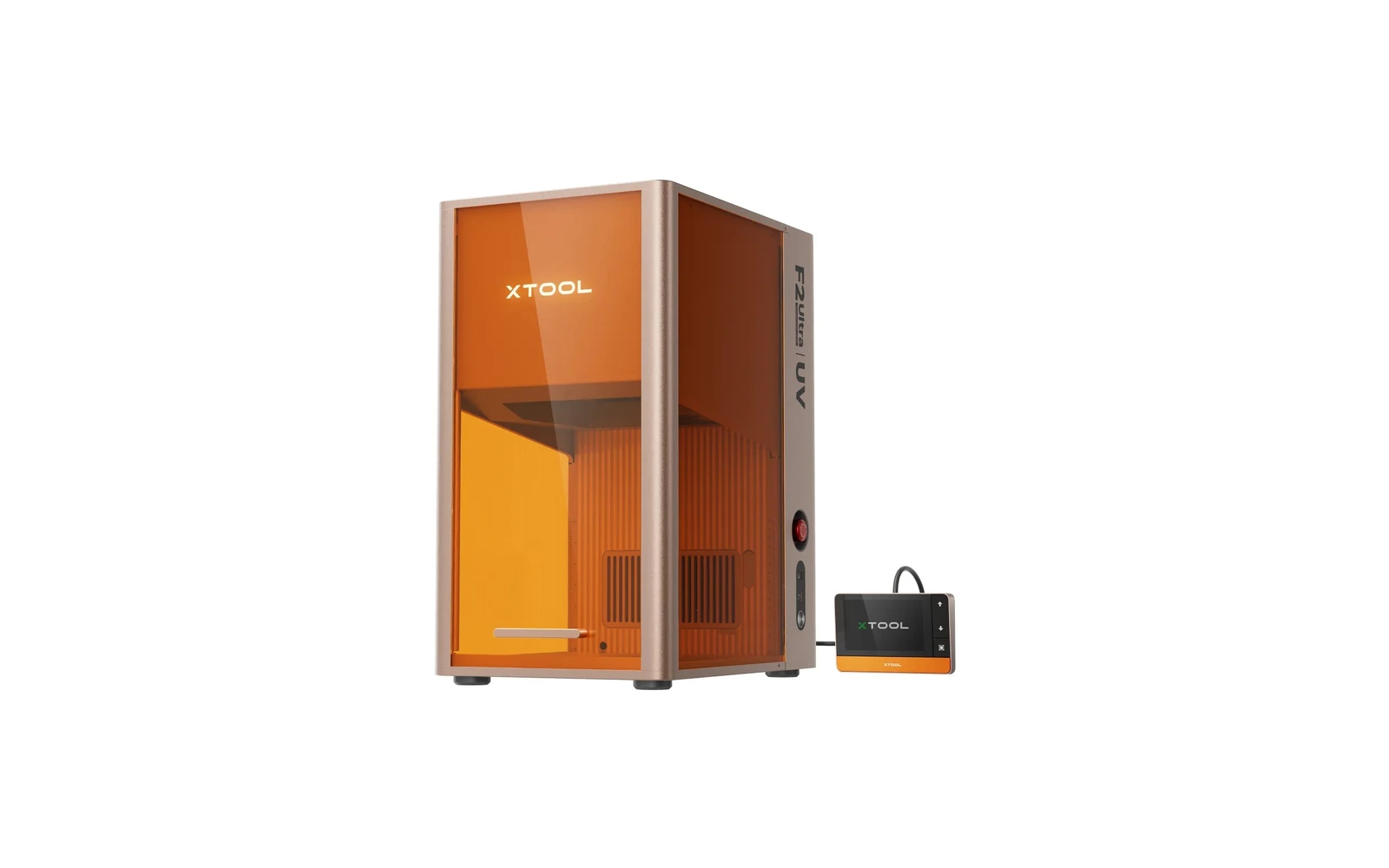
xTool · UV · $4,299 – $5,959
The F2 Ultra UV is the UV version of xTool's F2 Ultra: a single 5W 355 nm UV source on a galvo, in the same enclosed body, with a 200 × 200 mm field and two 48 MP cameras. Cold processing marks glass, crystal, plastics, ceramics and heat-sensitive materials without burnt edges, and a second lens engraves 3D images inside crystal blocks up to 70 × 70 mm. It is slow for deep engraving and not built for cutting. Not to be confused with the F2 Ultra, which pairs a 60W MOPA fiber with a 40W diode.