5 manufacturer photos · 1 / 5
xTool · Uv
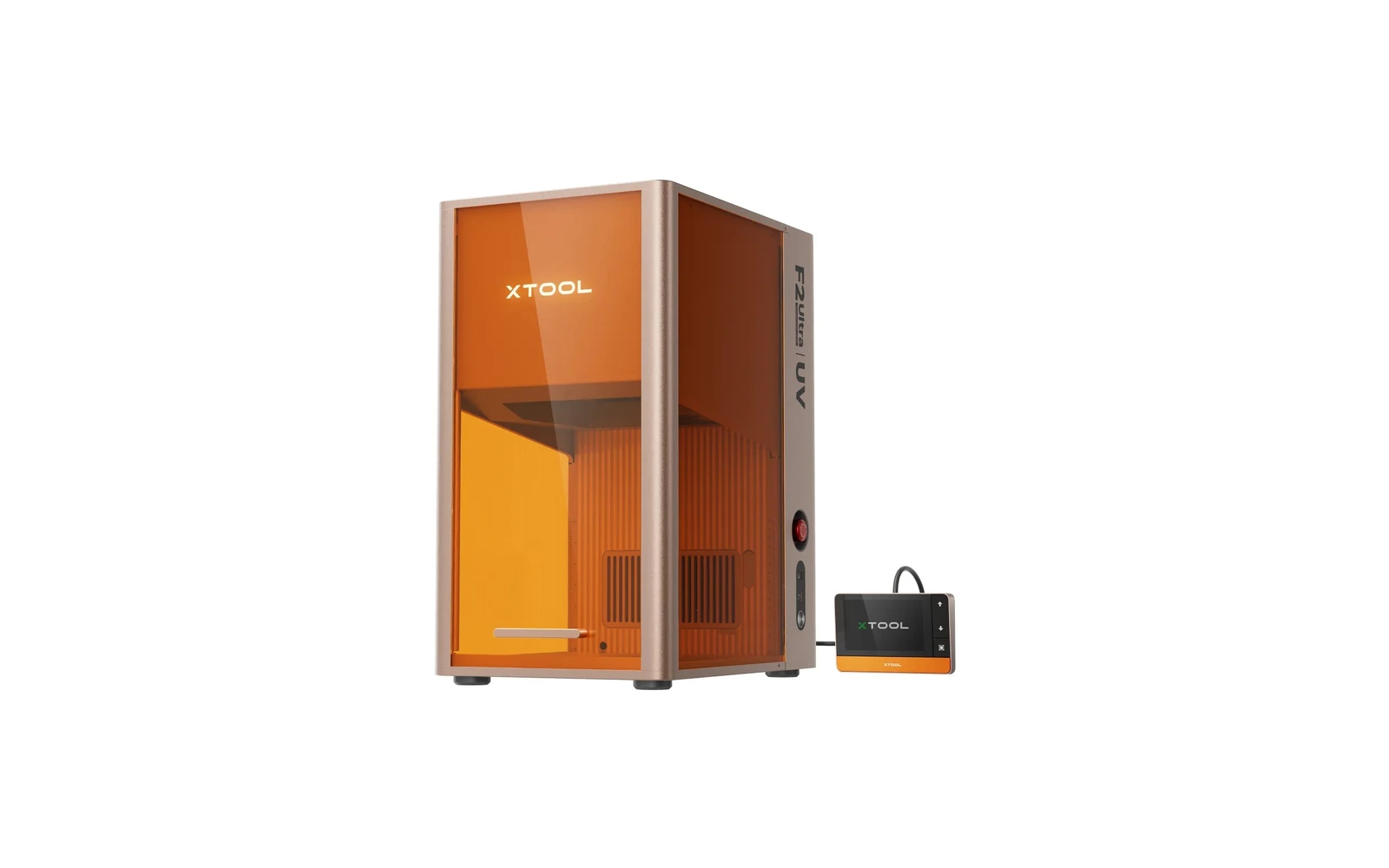
xTool F2 Ultra UV
Enclosed 5W 355 nm UV galvo for glass, crystal and plastics, with 3D inner engraving and two 48 MP cameras
All xTool models →Add to compare →
Last updated How we evaluate
Released November 2025
TL;DR
The F2 Ultra UV is the UV version of xTool's F2 Ultra: a single 5W 355 nm UV source on a galvo, in the same enclosed body, with a 200 × 200 mm field and two 48 MP cameras. Cold processing marks glass, crystal, plastics, ceramics and heat-sensitive materials without burnt edges, and a second lens engraves 3D images inside crystal blocks up to 70 × 70 mm. It is slow for deep engraving and not built for cutting. Not to be confused with the F2 Ultra, which pairs a 60W MOPA fiber with a 40W diode.
Best for
What makes this machine stand out
Hardware and workflow features worth understanding before you buy : not just wattage on a label.
3D inner engraving
A switchable lens engraves 3D images inside crystal blocks up to 70 × 70 mm, from photos or text converted in xTool Studio.
Cold 355 nm marking
The UV beam marks glass, plastics and heat-sensitive materials with very little heat, so edges stay clean without pre-coating or polishing.
Two 48 MP cameras
Dual cameras place designs on small parts and batches across the 200 × 200 mm field.
Our verdict
Ideal if you
The F2 Ultra UV is built for businesses that personalize glassware, crystal awards, plastic parts and electronics: cold UV marks stay clean on materials that burn or melt under diode and fiber lasers, and inner engraving opens a product line that other desktop lasers cannot offer. xTool's enclosure, cameras and guided software keep it easy to run.
Skip if you
At 5W, it is slow for deep engraving and only cuts thin materials. It costs as much as the F2 Ultra MOPA, which is the better tool for metal. Software is limited to xTool Studio, and a hands-on review noted no true auto-focus and no Ethernet port.
Pros
- Cold 355 nm processing: clean marks on glass, plastics and heat-sensitive materials without burnt edges
- 3D inner engraving in crystal blocks up to 70 × 70 mm, with a second lens and AI conversion of photos to 3D in xTool Studio
- 200 × 200 mm field and two 48 MP cameras for batch placement, in an enclosed body
Cons
- Slow for deep work: a reviewer needed about 6 hours and 256 passes for a shallow brass coin
- $4,299 for a single UV source, while the F2 Ultra MOPA costs the same
What this machine is for
Fine, burn-free marking of glass, crystal and plastics, plus 3D inner engraving, for a small business
Enclosed UV galvo for glass, crystal, plastics and 3D inner engraving
Laser spot size
< 0.01 mm
Motion precision: 0.001 mm
Sample engrave job
~8–15 min
10 × 10 cm (4 × 4 in)
Sample cut job
—
Reference benchmark: same job size on every machine so you can compare times fairly. Times are estimates for the reference job above; your design complexity and settings will change them.
Materials
- · Glass & crystal (surface and 3D inner)
- · Plastics (ABS, PE, PP, PET, EVA)
- · Acrylic
- · Ceramics
- · Silicone
- · Wood, leather & coated metal
Accessories & add-ons
Typical inclusions and add-ons for this profile : confirm your SKU.
- Included
Enclosure / cabinet
- Optional
Laser safety glasses
Still useful when servicing or with lid open
- Recommended
Fire extinguisher
Editorial guidance : not a live parts list. See also: Ventilation setup · Safety basics
Practical notes
Beginner notes
This profile covers the F2 Ultra UV, a UV-only machine. If you mainly mark metal, the F2 Ultra (MOPA fiber + diode) is the better buy at a similar price. Pick the UV version for glass, crystal, plastics and fine detail work.
Pro tips
Swap to the inner-engraving lens for crystal blocks and use the riser so the block sits at the right height. Keep separate material presets for glass surface marking and inner engraving. For batches of flat parts, the conveyor bundle saves repositioning time.
Pro / technical specsRaw numbers for experienced users comparing machines.
- Max speed (spec)
- 15,000 mm/s
- Avg engrave speed
- ~1,000–3,400 mm/s
- Avg cut speed
- —
Common questions
F2 Ultra UV or F2 Ultra: which one?
They share the body but not the laser. The F2 Ultra pairs a 60W MOPA fiber with a 40W diode for metal marking, color on stainless and wood. The F2 Ultra UV has a single 5W 355 nm UV source for glass, crystal, plastics and 3D inner engraving. Both start at $4,299 on xTool's store (October 2026): choose by material.
Can the F2 Ultra UV engrave inside crystal?
Yes. A second, switchable lens focuses the beam inside the block, and xTool gives a 70 × 70 mm inner-engraving zone. xTool Studio can turn a photo or text into a 3D model for it. A hands-on review found it the standout feature of the machine.
Can it cut materials?
Only thin ones. xTool lists cutting for wood, acrylic, glass and plastics without publishing thicknesses, and reviewers describe it as a marking machine, not a cutter. For cutting acrylic or wood, a CO₂ laser is far faster.
Alternatives to the xTool F2 Ultra UV
Machines in the same space, picked from our database by type, price, and score.
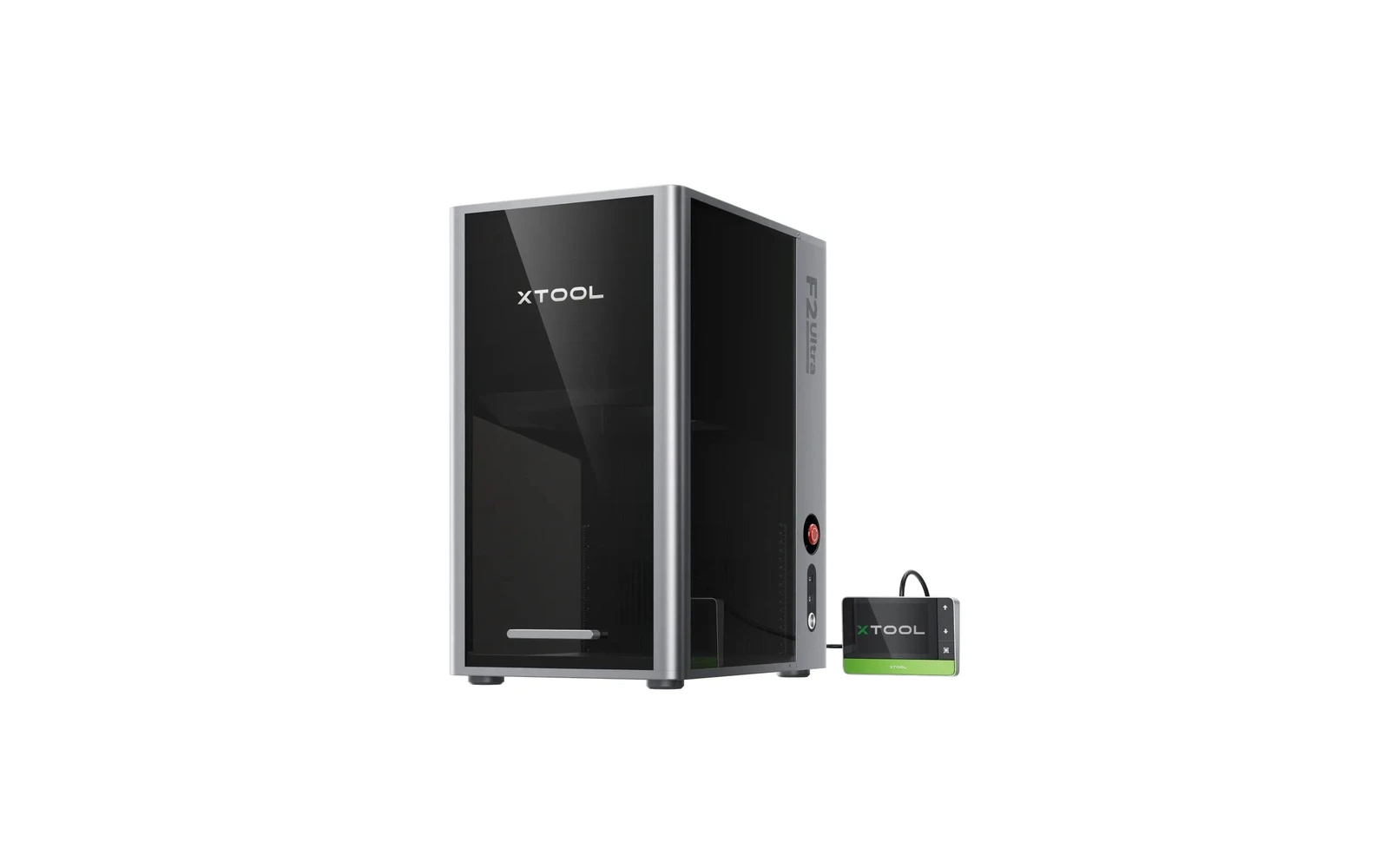
xTool · Hybrid · $4,299 – $6,969
xTool's flagship desktop dual laser: 60W MOPA fiber for color and deep metal marking, plus a 40W diode for wood and leather, in an enclosed 220 × 220 mm machine. Fast and precise, but priced for small businesses, not hobby use.
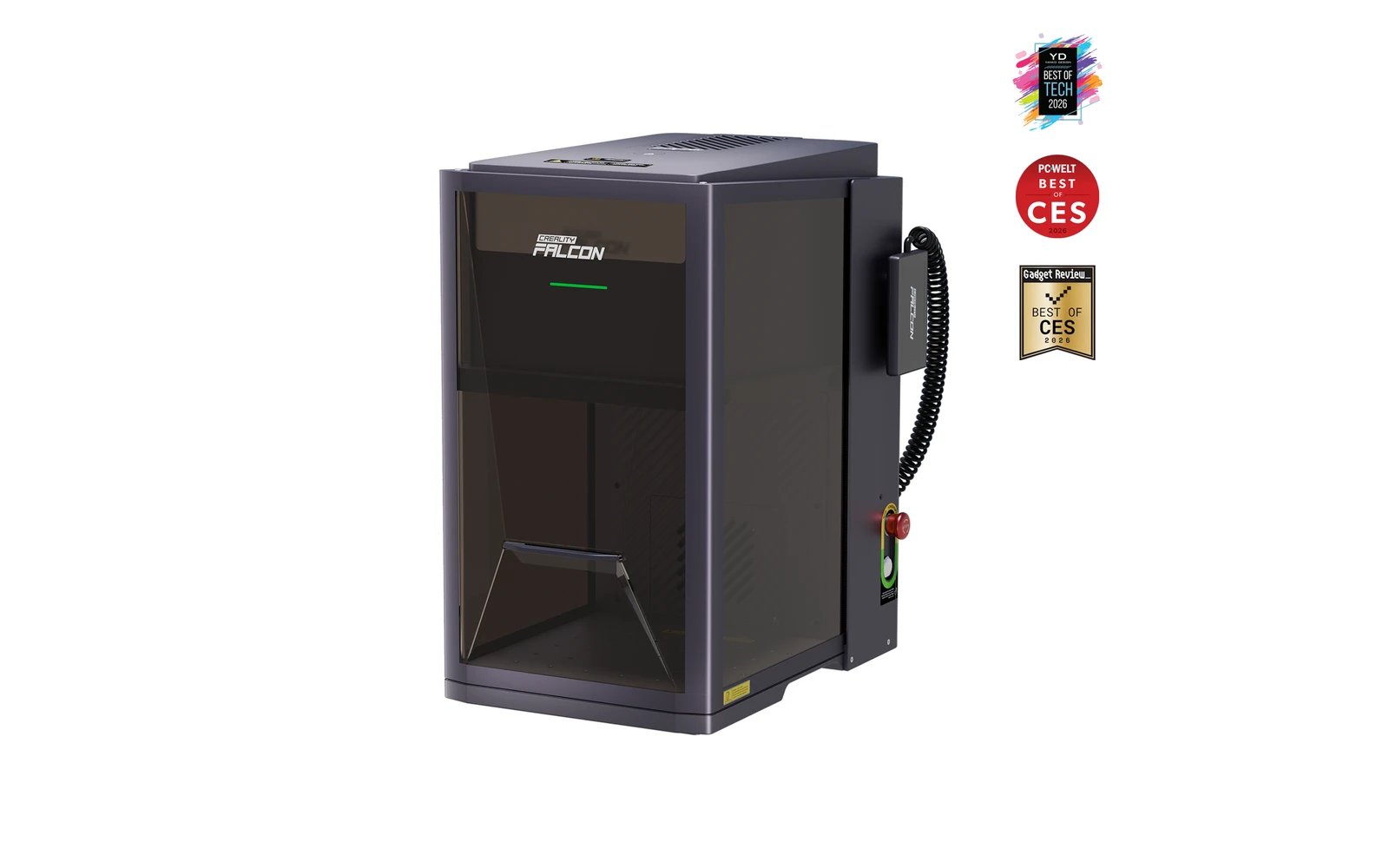
Creality · UV · $3,999
The 5W UV WaveSync module targets materials diode and fiber struggle with: glass, some films, and heat-sensitive plastics. Install on the same Falcon T1 enclosure when your shop adds UV jobs after wood or metal modules.
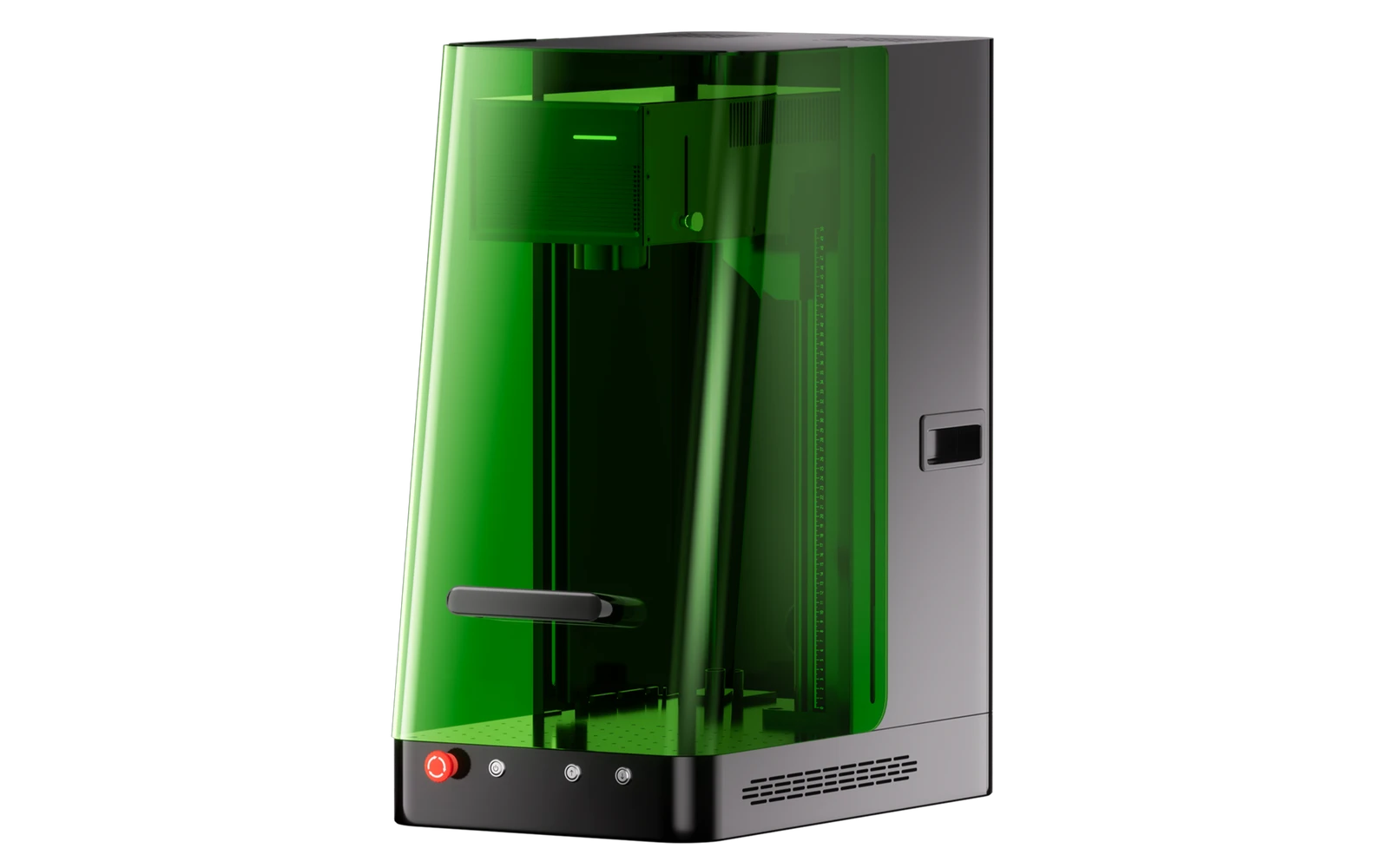
ComMarker · UV · $3,599 – $7,059
ComMarker Omni X uses UV wavelength for cold marking on glass, some plastics, and delicate materials without as much heat damage as fiber or CO₂. Slower than fiber on metal: different tool for different materials.