Best Diode Lasers 2026
Diode lasers are the most affordable way to engrave and cut wood, leather, and dark acrylic. Here are the models that score highest in our database, ranked by overall rating.
Rankings are generated from our scoring database — no sponsored placements. Scores reflect real-world capability, not marketing claims. How we score machines
- 1
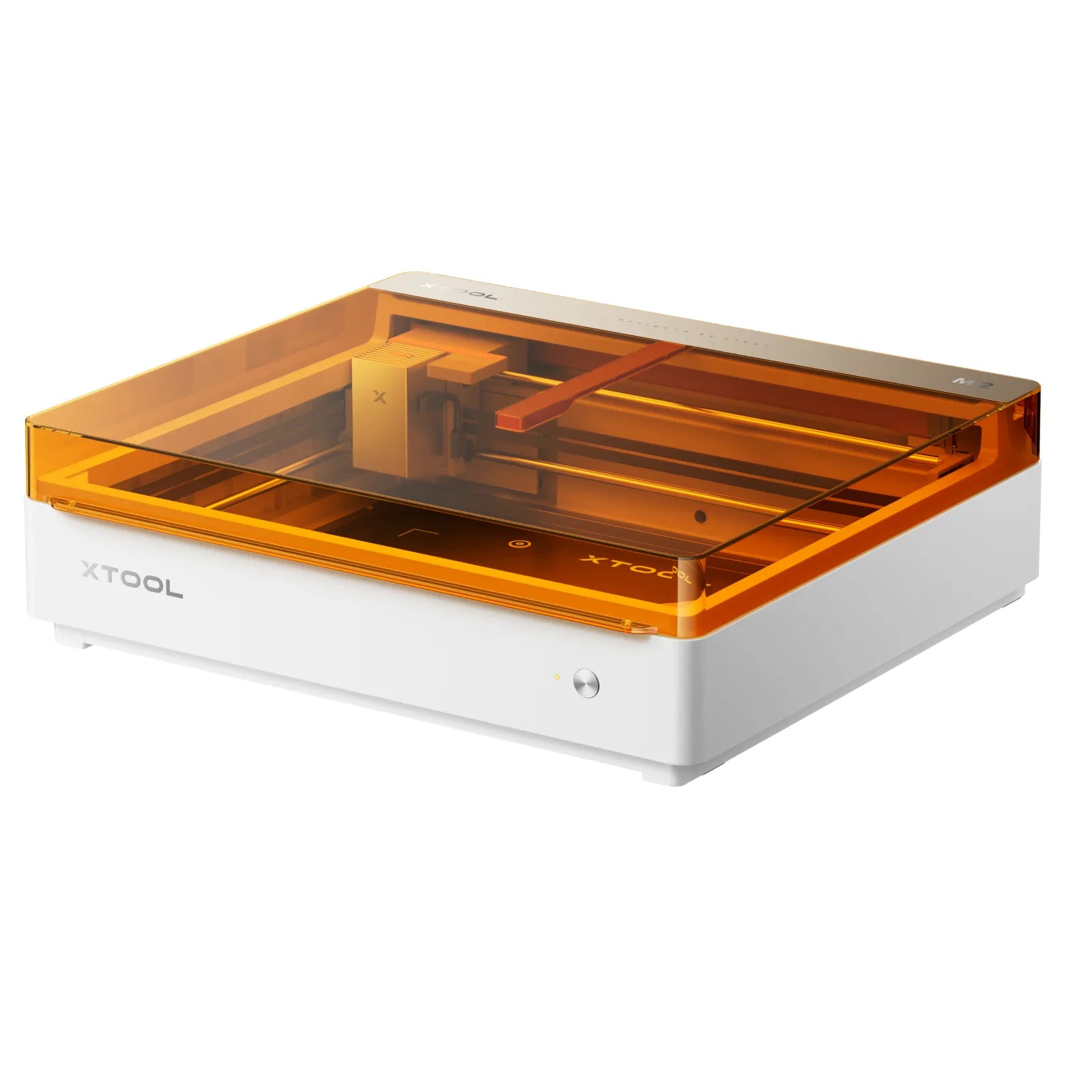 xTool M2 Color Craft Laser8.3
xTool · Diode · $499 – $1,849
Launched May 2026, the M2 packs laser engraving, cutting, and integrated inkjet color printing into one enclosed desktop at $599. Built for everyday crafters and Etsy sellers who want color + laser without a pro CO₂ budget: not a metal-marking or production cutter.
- +10W on xTool M2 Color Craft Laser: engraving-first: photo fills and leather at moderate speeds
- +Integrated cabinet helps contain the beam and everyday smoke versus open-frame diodes
- +Upgrade path on the same cabinet: xTool sells 20W ($599) and, since late October 2026, 40W ($899) diode modules; xTool rates the 40W for 15 mm basswood and 11 mm black acrylic
- −Clear cast acrylic and thick production cutting still favor CO₂, not diode power alone
- −Confirm optical wattage on the listing before you buy
- 2
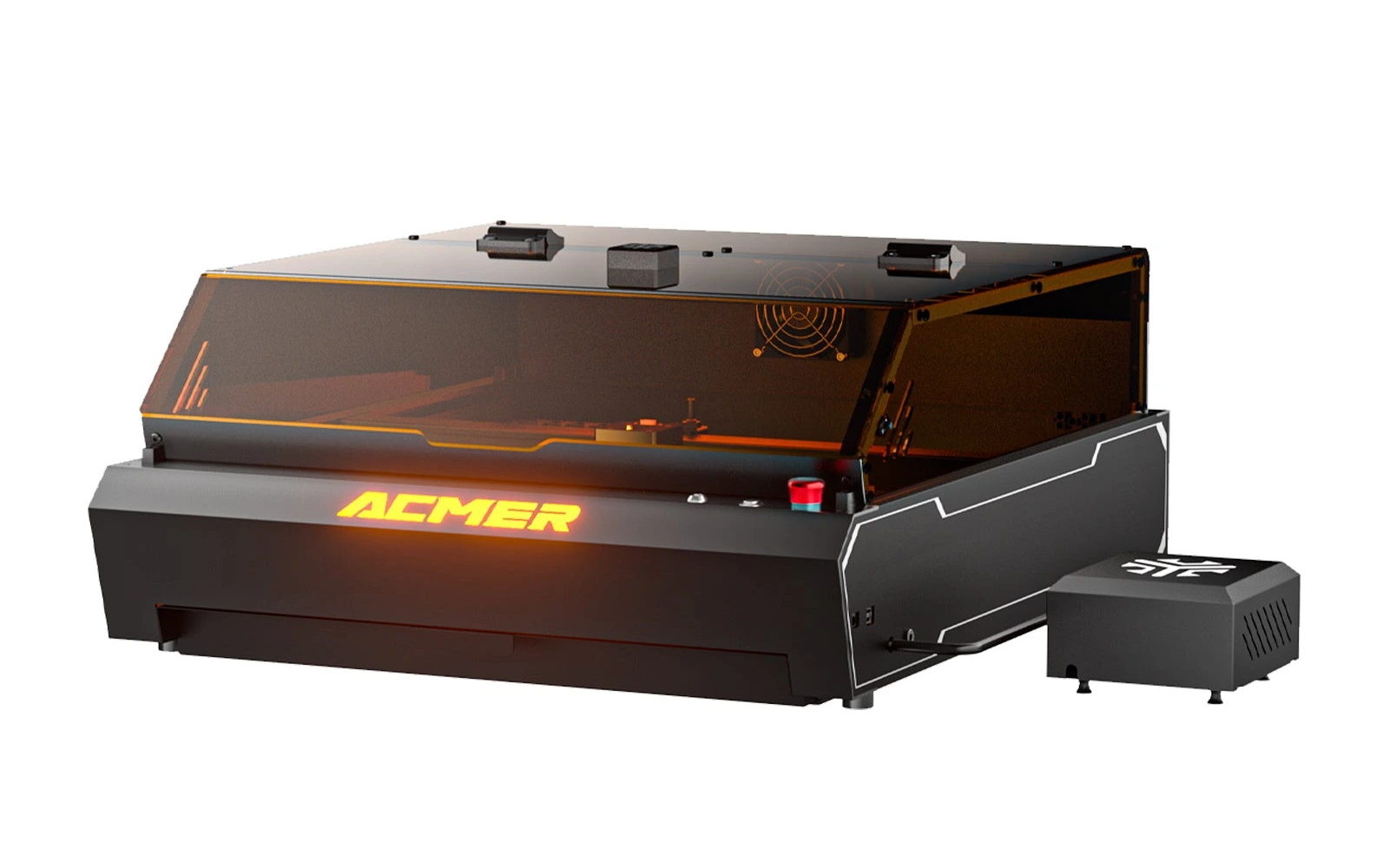 Acmer P38.2
Acmer · Diode · $1,149 – $2,069
The P3 48W is the cutting version of Acmer's enclosed P3: a Class 1 cabinet with a CoreXY gantry, 800 mm/s, a camera covering the whole bed and 30 L/min air assist. Its module switches between 24W and 48W, and Acmer rates it for 18 mm plywood and 18 mm black acrylic in one pass. At $1,149 for the Basic Pack (October 2026) it undercuts xTool's enclosed 40W by about $550; the trade-offs are a weaker included exhaust fan and software that reviewers call basic.
- +Acmer rates 18 mm plywood and 18 mm black acrylic in one pass, against 12 mm and 8 mm for the 24W
- +The same module drops to 24W for finer engraving, so one head covers cutting and detail work
- +$1,149 Basic Pack in October 2026, about $550 less than xTool's enclosed 40W S1
- −Wider 0.08 × 0.10 mm spot than the 24W module: fine photos look slightly softer at full power
- −Owners report the included exhaust fan lets smoke escape on long cuts: duct it outside
- 3
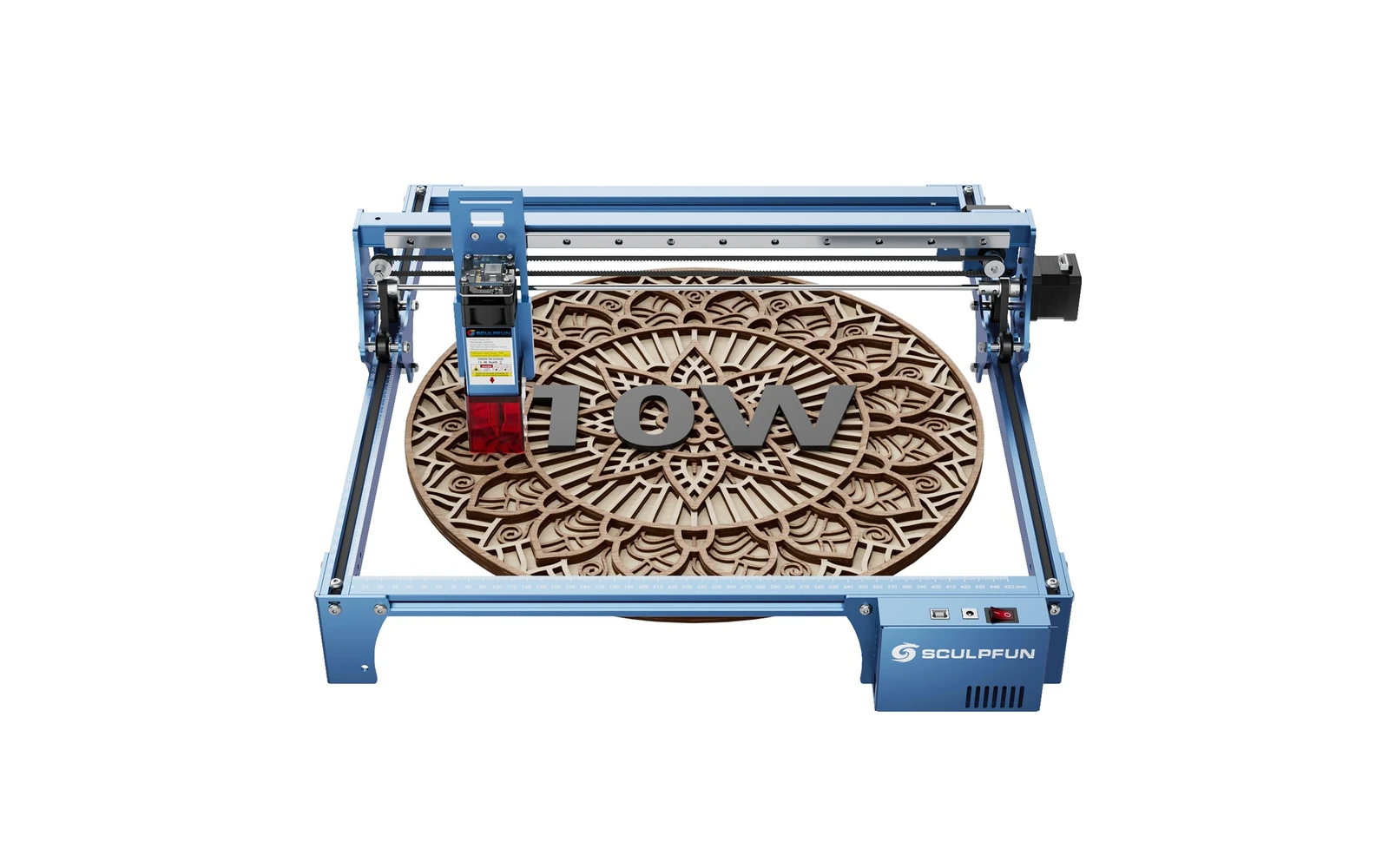 Sculpfun S10 10W8.2
Sculpfun · Diode · $270
Sculpfun S10 10W (2022) is a mid-size open-frame engraver with a sturdier industrial frame than S9, ~385 mm work area, and detachable laser cover. Positioned between budget S9 and S30 families for makers who want better rigidity without Ultra pricing.
- +10W on Sculpfun S10: engraving-first: photo fills and leather at moderate speeds
- +Open-frame: plan laser glasses, exhaust, and workspace rules from day one
- +Software on the profile: trial your workflow on scrap before production
- −Clear cast acrylic and thick production cutting still favor CO₂, not diode power alone
- −Confirm optical wattage on the listing before you buy
- 4
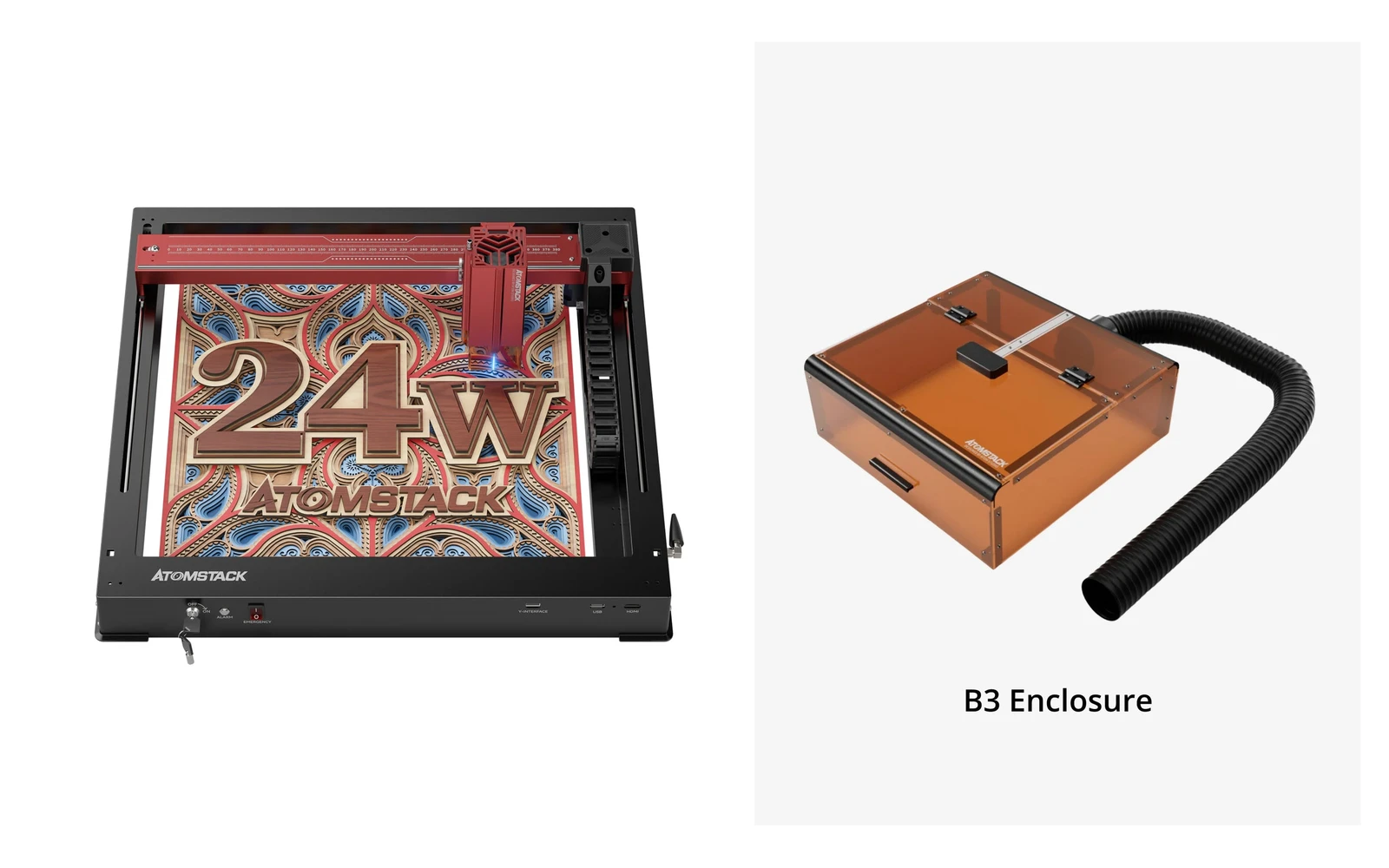 AtomStack A24 Pro8.1
Atomstack · Diode · $459 – $1,119
AtomStack A24 Pro is a 24W diode engraver and cutter (four 6W diodes) built on a unibody frame you set up in minutes. The 360 × 280 mm bed is small for this power class, but the optional conveyor stretches it to 360 × 800 mm. Diode only: for metal marking, Atomstack sells a separate A24 Pro 1064nm fiber version.
- +Everyday engrave and light cut mix: typical 6 mm basswood in several passes
- +Software listed on the profile: test your workflow (LightBurn or maker app) on scrap first
- −Clear cast acrylic and thick production cutting still favor CO₂, not diode power alone
- −Confirm optical wattage on the listing before you buy
- 5
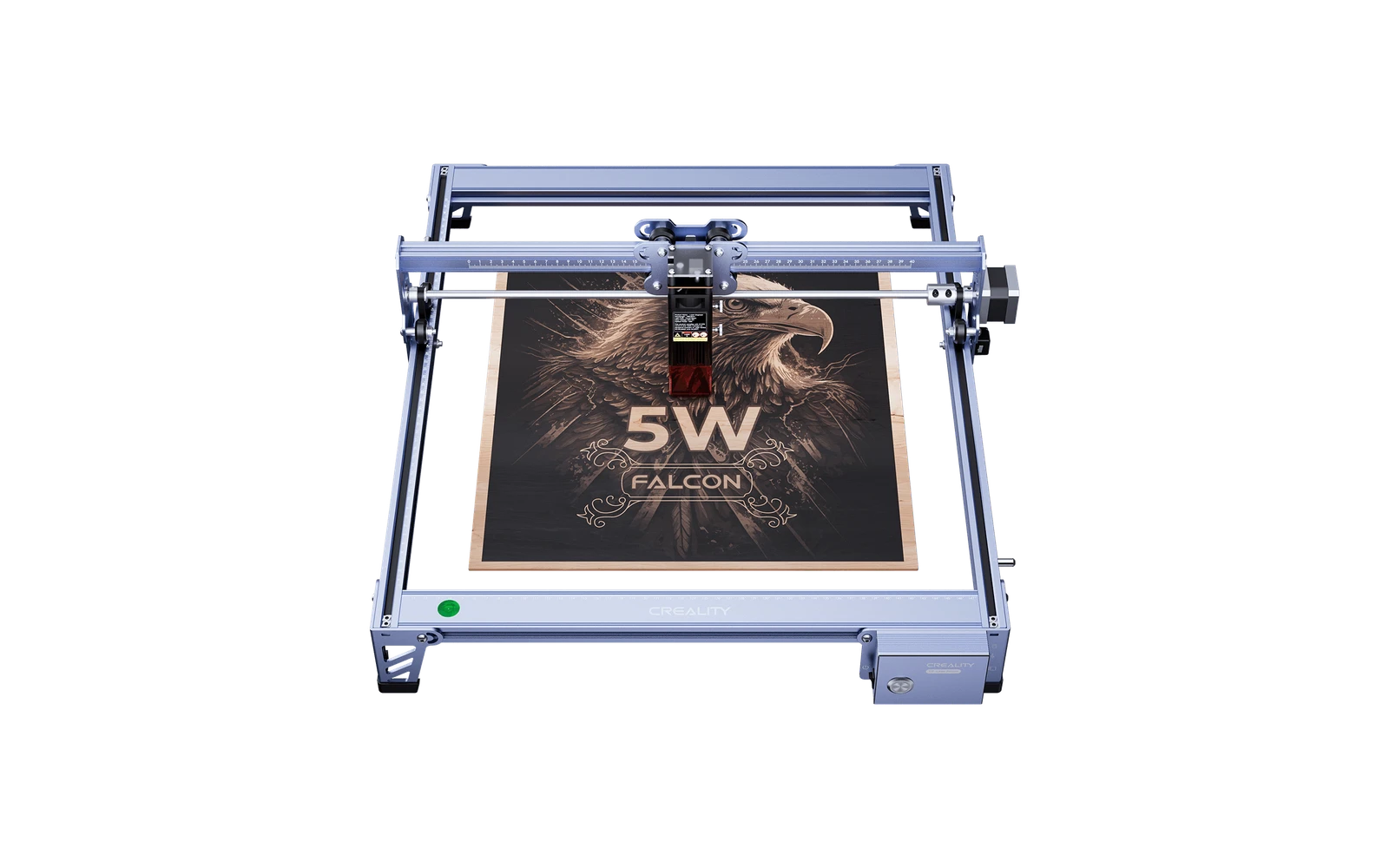 Creality Falcon 5W8.1
Creality · Diode · $119
Creality Falcon 5W is the 5W version of the CR-Laser Falcon: the same 400 × 415 mm open frame as the Falcon 10W with half the laser power. Fine for engraving and thin crafts at a very low price; cutting is slow.
- +5W on Creality Falcon: engraving-first: photo fills and leather at moderate speeds
- +Open-frame: plan laser glasses, exhaust, and workspace rules from day one
- +Software on the profile: trial your workflow on scrap before production
- −Clear cast acrylic and thick production cutting still favor CO₂, not diode power alone
- −Confirm optical wattage on the listing before you buy
- 6
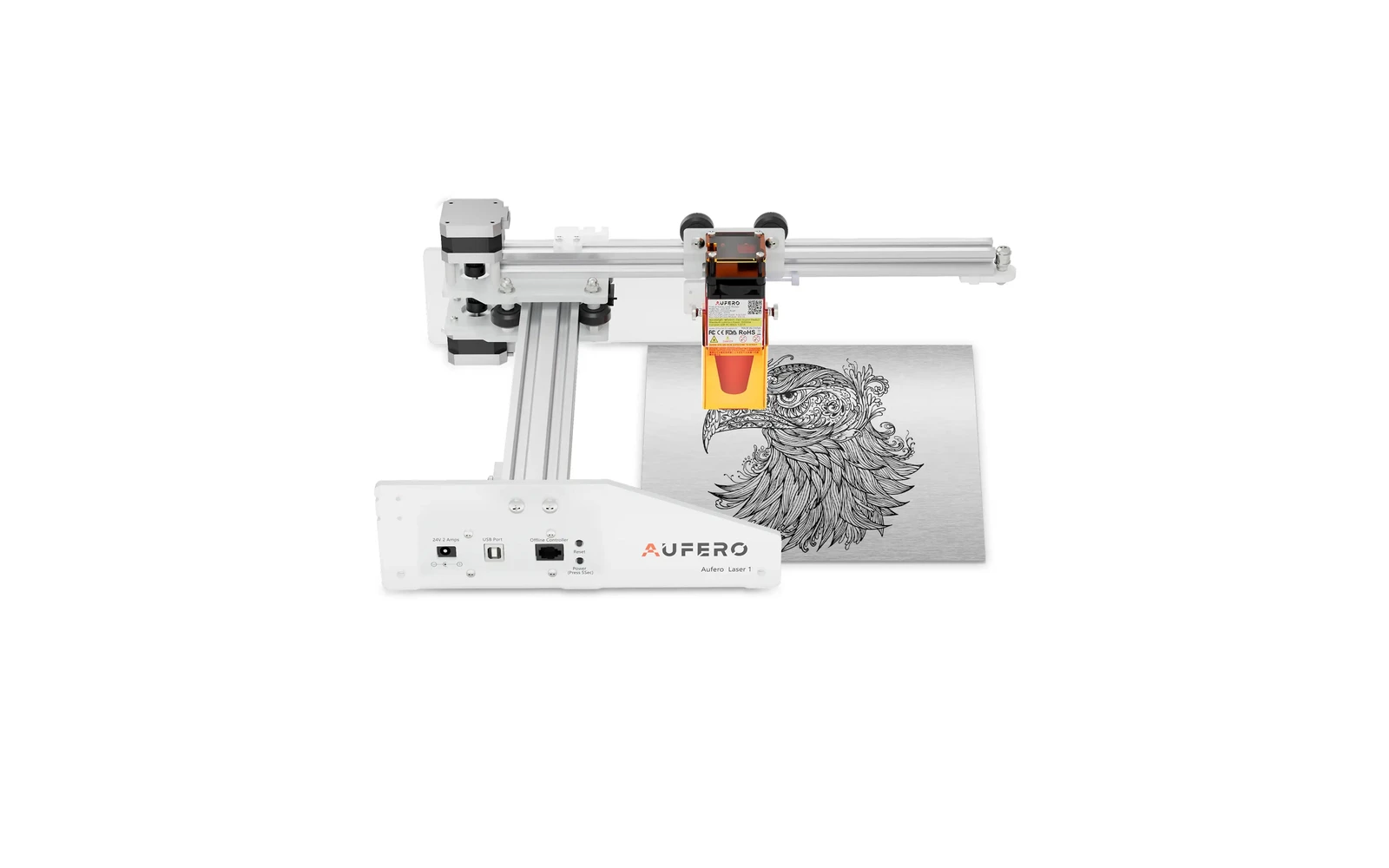 Ortur Aufero AL18.1
Ortur · Diode · $130 – $210
The Aufero AL1 is Ortur's compact diode line for small work areas and portable setups. Lower power than LM3 or H10, but easier to fit on a crowded desk. Best for light engraving: not a cutting workhorse.
- +5W on Ortur Aufero AL1: engraving-first: photo fills and leather at moderate speeds
- +Open-frame: plan laser glasses, exhaust, and workspace rules from day one
- +Software on the profile: trial your workflow on scrap before production
- −Clear cast acrylic and thick production cutting still favor CO₂, not diode power alone
- −Confirm optical wattage on the listing before you buy
- 7
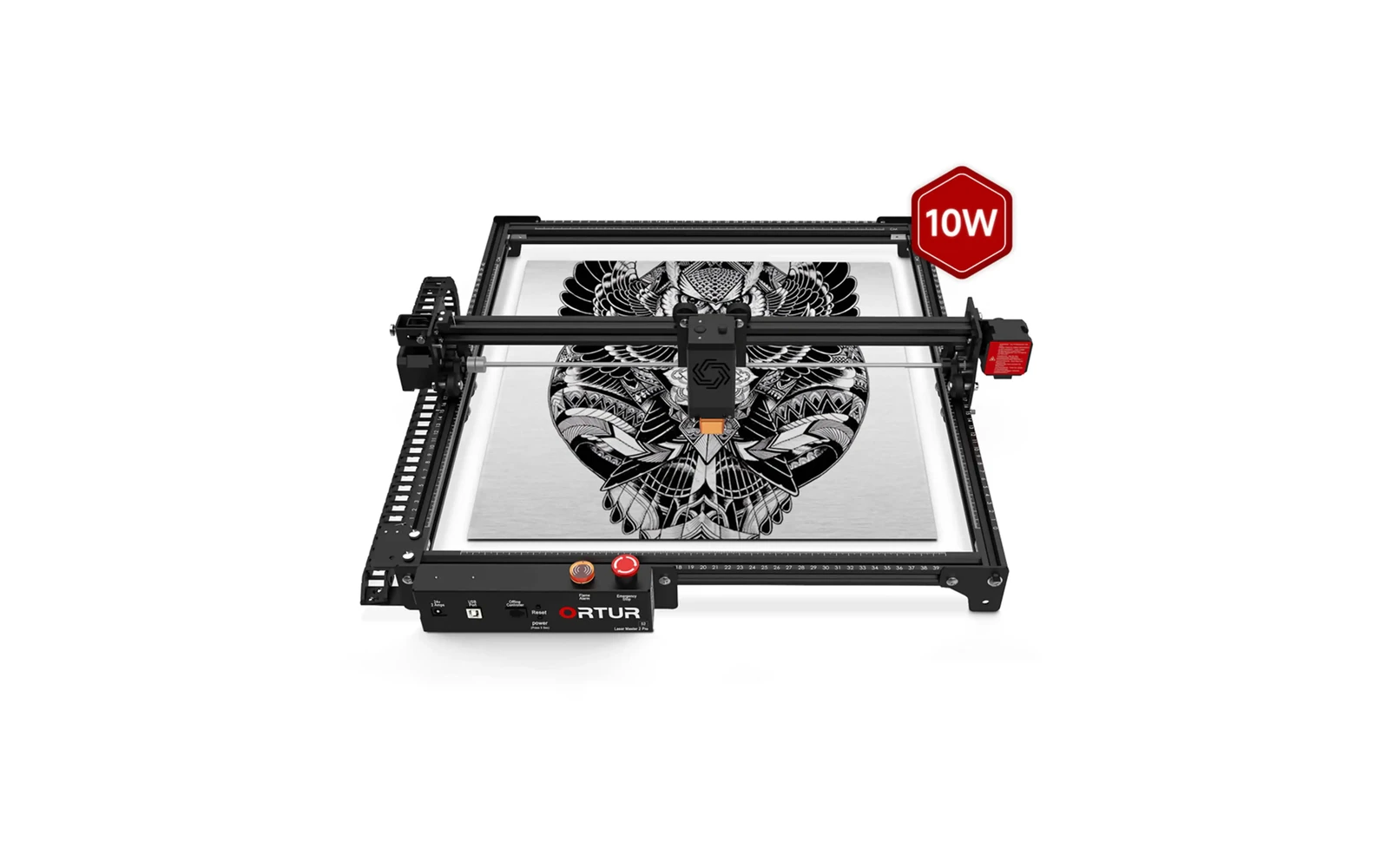 8.1
Ortur Laser Master 2 Pro is a discontinued Ortur classic still found used. Fine for learning if cheap; new buyers should choose LM3, H10, or H20 instead.
- +10W on Ortur Laser Master 2 Pro: engraving-first: photo fills and leather at moderate speeds
- +Open-frame: plan laser glasses, exhaust, and workspace rules from day one
- +Software on the profile: trial your workflow on scrap before production
- −Clear cast acrylic and thick production cutting still favor CO₂, not diode power alone
- −Confirm optical wattage on the listing before you buy
Optical or electrical watts: what does the number on a diode laser mean?
Diode lasers should be sold by optical output, the light that actually reaches the material, but some listings still quote electrical input, which is four to six times higher. A '40W' machine that draws 40W at the wall only delivers about 5 to 6W of light. Look for 'optical power' or 'output power' on the spec sheet. In our catalog the usual steps are 5W, 10W, 20W and 40W optical, plus a few 70W multi-diode modules. For engraving wood, leather and slate, 5 to 10W is plenty; extra power mainly buys cutting speed and thickness. A small spot (under 0.1 mm on recent 10W modules) matters more for fine engraving than raw power.
What can a diode laser cut and engrave?
Blue diode light at around 450 nm is absorbed well by wood, leather, cardboard, cork, fabric and dark or opaque acrylic. It passes through clear and blue acrylic and glass, so those cannot be cut, and it does not mark bare metal, apart from a slow dark mark on stainless steel, coated or anodized metal, or metal treated with a marking spray. As a rough guide, a 10W module cuts 3 mm plywood in one or two passes, a 20W module 5 to 6 mm, and a 40W module around 10 mm in several passes. Plywood quality matters as much as power: glue voids in cheap sheets stop the beam. If clear acrylic or bare metal is central to your plans, look at CO₂ or fiber instead.
How much does a good diode laser cost in 2026?
Under $250 buys a 5W or 10W open frame such as the Creality Falcon 5W or Sculpfun S10: good for engraving, slow for cutting. Between $250 and $600 you get 20W modules with air assist and limit switches, like the Acmer P1 20W, Longer Ray5 20W or Sculpfun S30 Pro Max. From $600 to $1,100, 40W open frames such as the Algolaser Alpha MK2 40W or Longer Ray5 40W cut thicker stock much faster. Enclosed diodes start around $500 for 12W (Sculpfun E1) and pass $1,500 for the xTool S1 40W. Above roughly $1,500 for an open frame, a desktop CO₂ usually becomes the better buy.
Which extras do you actually need with a diode laser?
Air assist is not optional for cutting: it clears smoke from the kerf, limits charring and protects the lens. Most 2026 machines include a pump; if not, budget $50 to $120. A honeycomb bed ($30 to $70) lifts the work so the underside does not scorch. A rotary roller or chuck ($80 to $250) is needed for tumblers and glasses. An open frame needs a way to send smoke outdoors, either an enclosure tent with an inline fan or a window duct. The glasses shipped in the box are often thin; buy a pair rated OD5+ at 445 to 450 nm from a known brand. On software, LightBurn costs about $99 for diode lasers, LaserGRBL is free, and most brands ship their own app.
Buying a used or discontinued diode laser
Popular discontinued models such as the xTool D1 Pro, Sculpfun S9 or Atomstack A5 Pro still sell well second-hand, and parts remain easy to find because the frames are simple. Ask for the module's optical power and how much it has been used, and check that the lens or protective window is not pitted or smoked. Run a fine test engraving: fuzzy edges usually mean a dirty lens or a tired diode. Check the belts, the gantry wheels and the limit switches. A used 10W frame at $150 can make sense, and many frames accept a newer module later, but compare with a new 10W at $200 to $250 before paying close to the original price.
Frequently asked questions
What is the best diode laser in 2026?
The xTool M2 Color Craft Laser ranks first in our database with an overall score of 8.3/10, starting around $499. Launched May 2026, the M2 packs laser engraving, cutting, and integrated inkjet color printing into one enclosed desktop at $599. Built for everyday crafters and Etsy sellers who want color + laser without a pro CO₂ budget: not a metal-marking or production cutter.
What is the most affordable good diode laser?
Among our top picks, the Creality Falcon 5W is the most affordable, starting around $119 with an overall score of 8.1/10.
How are these rankings built?
Rankings are generated from our scoring database — capability, ease of use, build quality, and value, weighted for each category. There are no sponsored placements, and scores reflect real-world performance rather than marketing claims.